
NASA Harvest Joins Mathematica-Led, Gates Foundation-Funded Consortium to Develop Agricultural AI Tool
NASA Harvest is joining Mathematica and the University of Maryland in a new Gates Foundation-funded project to develop an AI-powered tool designed to help agricultural organizations and development agencies apply research evidence to decisions on the ground. The project will combine agricultural research with predictive modeling, geospatial data, and satellite imagery to help users assess which agricultural practices may be most effective under different local conditions. Initial work will focus on Ethiopia, Kenya, and Nigeria.
NASA Harvest’s Ritvik Sahajpal will serve as co-principal investigator on the project, with NASA Harvest Director Inbal Becker-Reshef and Alyssa Whitcraft, director of our sister organization NASA Acres, serving as lead advisors.
Read Mathematica’s press release below.
The Gates Foundation has selected Mathematica to lead development of an AI-powered decision-support platform that will help agricultural organizations and development agencies make faster, evidence-informed decisions about which agronomic practices are most likely to work in specific local conditions.
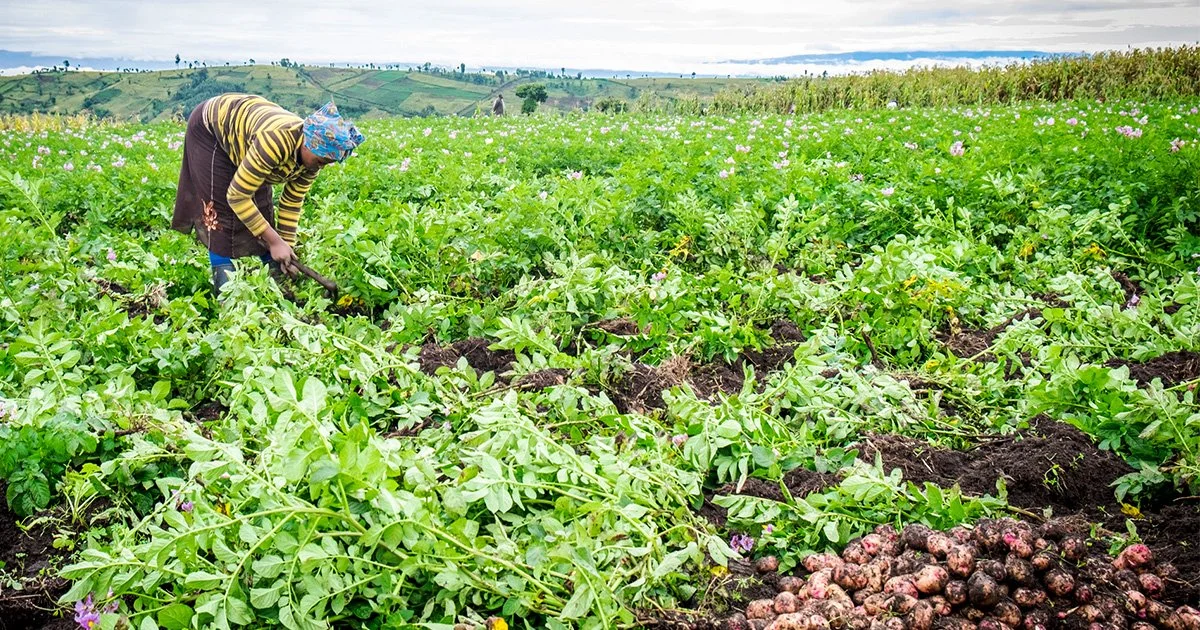
Mathematica is leading a consortium with the University of Maryland and NASA Harvest to build the platform by applying a user-centered design approach. The project will initially focus on Ethiopia, Kenya, and Nigeria before expanding its scope to cover additional countries.
"Organizations that invest in agricultural development projects shouldn't have to spend months combing through academic journals before making important design decisions," said Anthony Louis D'Agostino, co-principal investigator and acting director of Mathematica's Data Innovation Lab. "Our goal is to support the scale-up of agricultural practices that are known in the literature to be effective, but whose appropriateness for a particular location is not yet known."
Agricultural evidence is abundant, but applying it to a particular investment or location can be difficult. The tool will help users estimate how specific agricultural practices could affect outcomes such as crop yields and agricultural revenue, by explicitly accounting for differences in weather conditions, soil characteristics, and other factors that influence on-farm performance. . The tool will use AI to extract the statistical results contained in thousands of empirical studies on agricultural practices and combine those findings with predictive modeling and geospatial data.
"By combining satellite imagery, AI, and agricultural research, we're creating a tool that helps organizations answer questions like, 'which practices could lead to higher yields than our current approach?' and 'which locations should we prioritize when scaling up successful pilot studies?'" identify promising locations where interventions should be scaled," said Ritvik Sahajpal, co-PI, Associate Research Professor at University of Maryland, and crop-condition co-lead at NASA Harvest.
The tool, which will be publicly accessible, is intended to help organizations move from broad evidence about what works to more practical decisions about what to fund and implement in a particular context.
"Agricultural organizations need better ways to turn research into action," said Richard Caldwell, senior program officer at the Gates Foundation. "ASTA has the potential to make evidence more accessible and help guide investments toward practices that are most likely to succeed in local contexts."